Impact of the 2026 Work in America Survey on Mental Health
New APA research
What the 2026 Work in America Survey Means for Workplace Mental Health
Explore what APA’s latest survey reveals about employee well-being—and why its findings matter to Vermont psychologists and the people they serve.

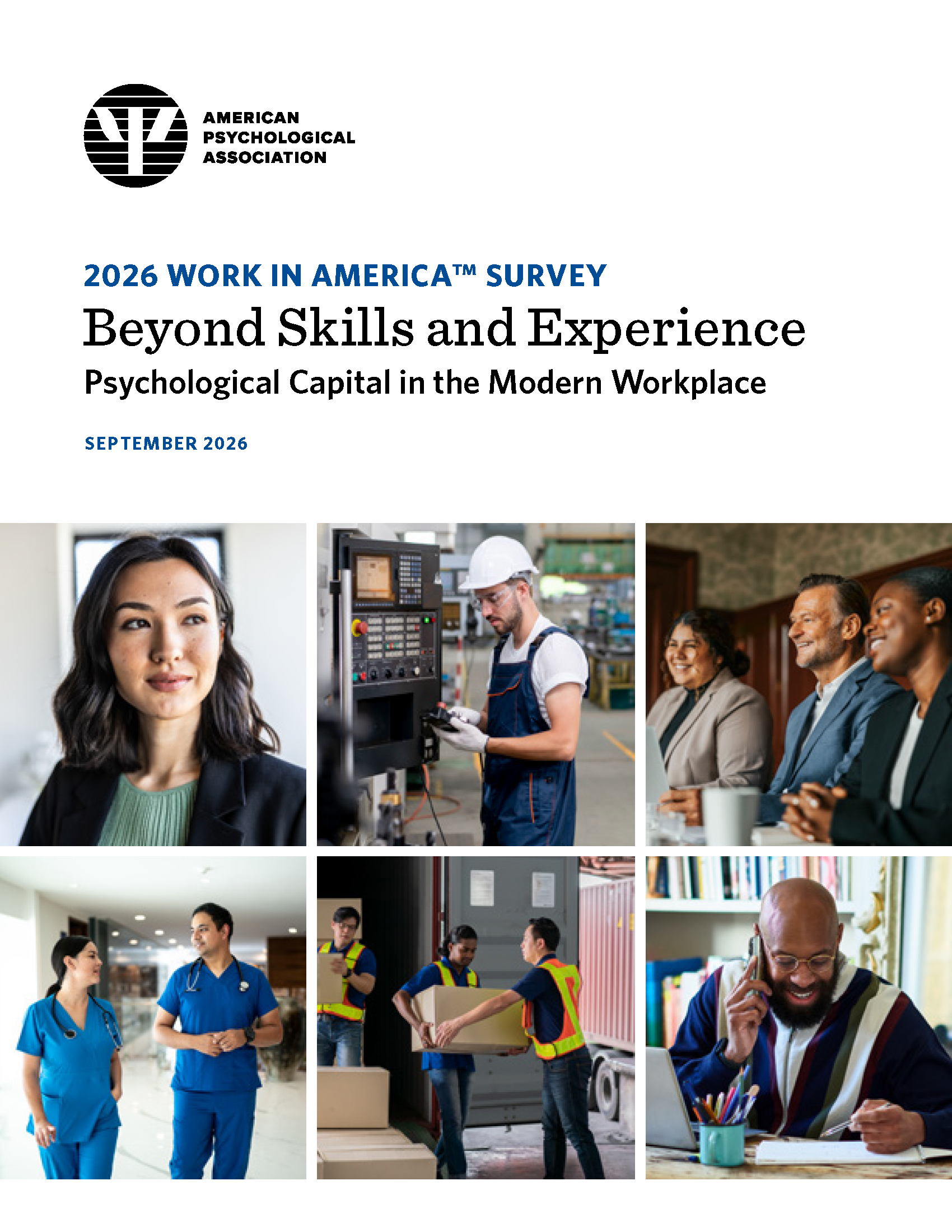
APA Releases Its 2026 Work in America Survey
The American Psychological Association’s 2026 Work in America Survey offers a timely look at how employees experience stress, support, and satisfaction on the job. For psychologists and the broader behavioral health workforce, these findings can inform conversations with clients, workplace consultation, and efforts to build healthier organizations. As Vermont professionals respond to the ways work shapes mental health, the report provides a useful starting point for identifying concerns, asking better questions, and connecting employers with evidence-informed approaches.
Three Measures Worth Watching
%
Workers who say work harms their mental health
%
Workers who feel tense or stressed during the workday
%
Workers who fear losing their jobs
Practical Implications for Organizations
- Developing psychological capacities like PsyCap can enhance employee adaptation and workplace satisfaction.
- Investing in workplace culture that fosters support and confidence can improve responses to AI and change.
- Leaders are encouraged to balance technical investment with strategies to strengthen employees’ psychological resilience and efficacy.
What the Survey Means for Vermont Psychologists
For psychologists in Vermont, the 2026 Work in America Survey offers a framework for discussing how work conditions intersect with mental health. In clinical practice, its themes can help guide questions about workload, workplace relationships, job insecurity, and barriers to seeking support—without assuming that every worker has the same experience.
The report can also inform consultation with employers, educators, and community partners on practical approaches to employee well-being. For psychologists engaged in advocacy, it provides a timely starting point for conversations about access to care, psychologically informed workplace policy, and the value of prevention alongside treatment. Vermont practitioners can use these insights to connect individual concerns with the broader systems that shape working life.


Put the Findings to Work in Vermont
Explore the survey findings and consider what they mean for your practice and the people you serve. Stay connected with VPA for related resources and advocacy updates relevant to Vermont psychologists.

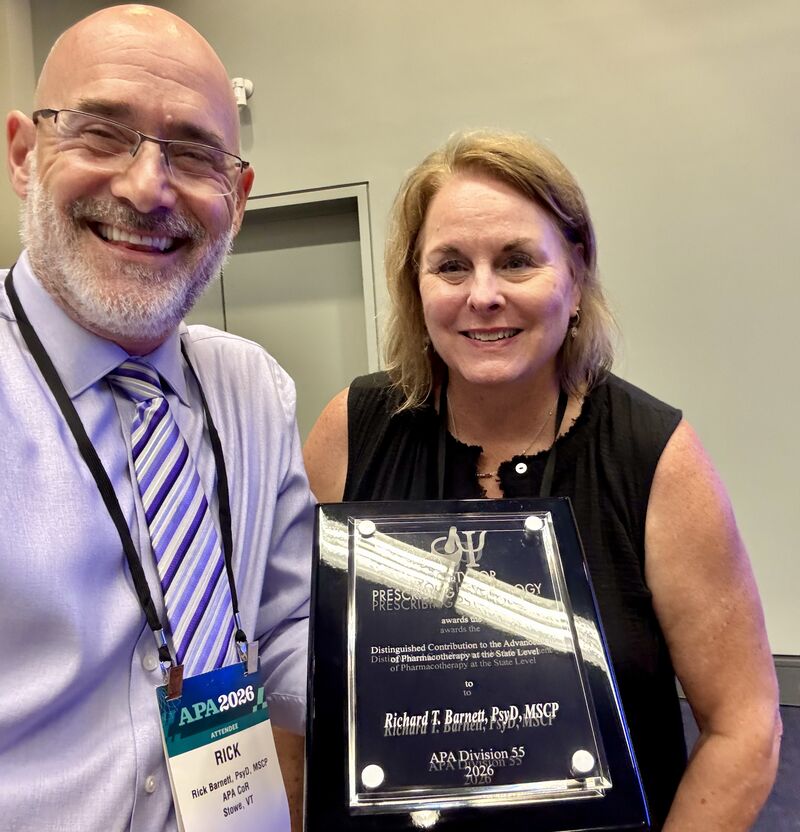

Dr. Rick Barnett, VPA Legislative Committee Chair and long-term VPA member received the 2026 award for Distinguished Contribution to the Advancement of Pharmacotherapy at the State Level from the APA Division 55, Society for Prescribing Psychology for his efforts in advocating for passage of legislation to allow psychologists-doctorates with advanced training to prescribe psychotropic medications in Vermont.
Dr. Barnett led that 10-year advocacy effort with the full backing of the Vermont Psychological Association and we could not be more thrilled that his success and effort has been recognized nationally. Dr. Barnett recently explained the drive behind seeking prescriptive authority for psychologists:
“There is still a good deal of misunderstanding about what it means to be a ‘prescribing psychologist.’ . . . . The goal isn’t simply to prescribe medication. It is to bring the depth and perspective of psychology together with the science of medicine so that we can help patients make thoughtful, informed decisions about when medication may help, when it may not, and when it may no longer be needed.”
We look forward to seeing the legislation in Vermont implemented and creating a new generation of prescribing psychologists.
Dr. Barnett is also scheduled to be the keynote speaker on clinical psychopharmacology at the American Academy of Clinical Psychology’s 2026 Leadership Summit in October 2026.