
Impact of the 2026 Work in America Survey on Mental Health

New APA research

What the 2026 Work in America Survey Means for Workplace Mental Health

Explore what APA’s latest survey reveals about employee well-being—and why its findings matter to Vermont psychologists and the people they serve.

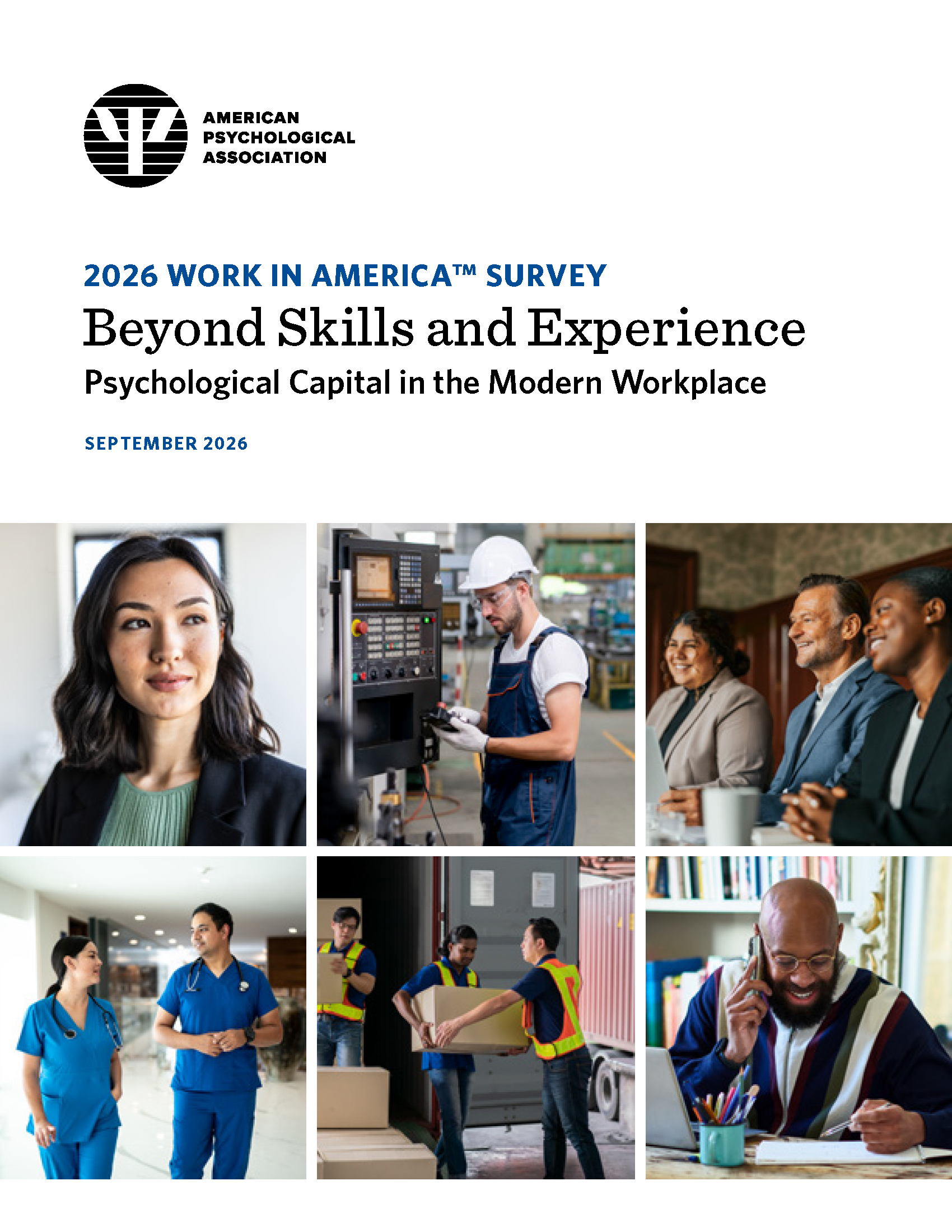
APA Releases Its 2026 Work in America Survey

The American Psychological Association’s 2026 Work in America Survey offers a timely look at how employees experience stress, support, and satisfaction on the job. For psychologists and the broader behavioral health workforce, these findings can inform conversations with clients, workplace consultation, and efforts to build healthier organizations. As Vermont professionals respond to the ways work shapes mental health, the report provides a useful starting point for identifying concerns, asking better questions, and connecting employers with evidence-informed approaches.

Three Measures Worth Watching

%

Workers who say work harms their mental health

%

Workers who feel tense or stressed during the workday

%

Workers who fear losing their jobs

Practical Implications for Organizations

  • Developing psychological capacities like PsyCap can enhance employee adaptation and workplace satisfaction.
  • Investing in workplace culture that fosters support and confidence can improve responses to AI and change.
  • Leaders are encouraged to balance technical investment with strategies to strengthen employees’ psychological resilience and efficacy.

What the Survey Means for Vermont Psychologists

For psychologists in Vermont, the 2026 Work in America Survey offers a framework for discussing how work conditions intersect with mental health. In clinical practice, its themes can help guide questions about workload, workplace relationships, job insecurity, and barriers to seeking support—without assuming that every worker has the same experience.

The report can also inform consultation with employers, educators, and community partners on practical approaches to employee well-being. For psychologists engaged in advocacy, it provides a timely starting point for conversations about access to care, psychologically informed workplace policy, and the value of prevention alongside treatment. Vermont practitioners can use these insights to connect individual concerns with the broader systems that shape working life.

+

Put the Findings to Work in Vermont

Explore the survey findings and consider what they mean for your practice and the people you serve. Stay connected with VPA for related resources and advocacy updates relevant to Vermont psychologists.

Diversity & Social Justice Resource List

A New Resource Guide for Diversity, Social Justice & Equity

Explore the first edition of the VPA Diversity & Social Justice Committee’s curated resource list, created to support meaningful learning, reflection, and action.

Created to Support Learning, Reflection, and Action

The VPA Diversity & Social Justice Committee developed this first-edition resource list to help psychologists and other community members engage more deeply with issues of diversity, social justice, and equity. Curated as an accessible PDF, the guide brings together trusted materials that can inform clinical practice, professional development, teaching, advocacy, and personal reflection. By sharing diverse perspectives and practical educational tools, the Committee hopes to encourage ongoing dialogue, strengthen culturally responsive work, and support meaningful action toward more equitable communities.

What You’ll Find in the First Edition

Books & Picture Books

Selections for adults, children, families, and educators that invite conversation and expand understanding across identities and experiences.

Films & Articles

Documentaries, films, essays, and scholarly or accessible articles that offer context, insight, and opportunities for deeper reflection.

Speakers & Educational Resources

Recommended speakers and additional learning materials to support workshops, presentations, discussion groups, and continued study.

Ways to Use the Resource List

Strengthen Professional Development

Select books, articles, films, and speakers that expand your understanding of culturally responsive practice, bias, identity, and equity.

Support Clinical Reflection

Use the materials to examine how systemic oppression and social location may shape assessment, treatment, ethics, and therapeutic relationships.

Enrich Coursework and Training

Incorporate relevant resources into classes, supervision, internships, workshops, and continuing education conversations.

Facilitate Team Discussions

Share a resource with colleagues, consultation groups, or workplace committees to encourage informed dialogue and meaningful action.

Build Community Partnerships

Identify materials that can support collaboration with schools, community organizations, advocates, and other local partners.

Prepare for Presentations

Draw on the list when developing trainings, discussion groups, or public programs focused on diversity, justice, and inclusion.

Guide Personal Learning

Explore perspectives and lived experiences beyond your own through picture books, films, essays, and other accessible formats.

Return to It Often

Use the PDF as a living starting point for ongoing learning, reflection, and conversation throughout your professional journey.

A Continuing Commitment to Equity and Social Justice

The VPA Diversity & Social Justice Committee created this first edition of the resource list as a practical starting place for learning, reflection, and action. Its selections address equity, inclusion, systemic oppression, culturally responsive practice, and the many ways social conditions affect mental health and access to care.

This is an evolving effort. The Committee remains committed to identifying, reviewing, and sharing materials that elevate diverse voices, deepen understanding, and support psychologists in serving Vermont’s communities with greater awareness and accountability. We encourage readers to engage with the list thoughtfully, share it with colleagues and learners, and return to it as their knowledge and practice continue to grow.

Explore the First-Edition Resource List

Download the PDF, discover resources that support ongoing diversity and social justice learning, and share it with colleagues and communities. Your engagement and recommendations can help this living resource continue to grow.